







What Is a Smart Pet Feeder?
A smart pet feeder is an automatic feeding device that dispenses food based on schedule and portion settings either directly on the machine or through a smartphone application. Unlike the traditional gravity feeders that dispense food continuously, smart feeders allow owners to have precise control over meal timing and quantity. This helps create healthier eating habits and reduces problems like overeating, obesity and irregular feeding patterns.

Most modern smart feeders connect to Wi-Fi networks to enable users to control feeding schedules remotely. Think of traffic, staying late at the office, or heading somewhere else in town. No more worrying that your pet will miss dinner – you can just open an app and start a feeding session in seconds. Some more advanced systems even send out notifications to confirm meals have been successfully delivered.
The technology has been evolving rapidly over the past few years. Newer models feature cameras, two-way audio communication, voice assistants, food-level sensors and integration into larger smart-home ecosystems. The market’s continuing growth is driven, in large part, by connected functionality, according to industry analysts. Remote monitoring, automated updates and integration with digital assistants such as Alexa are also likely to be included in smart feeders.
How Smart Feeding Technology Works
At its heart, smart feeding technology is a blend of mechanical systems for delivering food and digital software controls. The dry pet food is stored in an air-tight container and an internal motor dispenses pre-set amounts at pre-set times. The software side guarantees accuracy and allows pet owners to set up multiple feeding plans based on age, weight and dietary needs.
Many systems have sensors for low food levels or potential blockages. They prevent common problems such as hoppers running out of food or the kibble mechanism jamming. Some modern devices are even equipped with artificial intelligence and biometric recognition to create personalized feeding experiences for individual pets in multi-pet households.
Key Components Inside a Smart Feeder
A smart feeder is usually composed of several important elements that work together smoothly. The container stores the food to keep it fresher. The dispensing motors control the amount of food. Wi-Fi modules enable communication with smartphone applications and backup battery systems provide operation during power outages. Higher end products may have HD cameras, microphones, speakers and motion detection systems.
These parts turn a simple feeding bowl into more of a personal assistant for your pet’s care. It is like a smartwatch that tracks human activity, but a smart feeder tracks feeding routines, offering consistency during unpredictable times.
Why Smart Pet Feeders Are Growing in Popularity
The pet tech explosion is part of larger changes in consumer behaviour. Today, people want convenience, automation and remote control in all aspects of daily living. Pets fit right in that digital ecosystem. As more people embrace flexible work arrangements, frequent travel, or the demands of juggling multiple responsibilities, the demand for dependable, connected solutions has surged.

Research shows that the overall market for pet technology was more than $9 billion in 2025 and growing at double digit rates. Among the fastest growing segments for smart feeders. A key driver of the trend is higher spending on pet health and wellness.
The Rise of Pet Technology
Pet technology is no longer a luxury category for affluent consumers. Smart collars, GPS trackers, automatic litter boxes and smart feeders are now mainstream market. Especially millennials and Generation Z, young pet owners that are used to controlling devices at home via mobile applications, and smart pet products are a natural extension of their lifestyles.
The concept is similar to home automation. Owners no longer just program lights and thermostats, but automate feeding schedules, monitor pet activity, and receive health-related insights. Technology becomes another pair of hands, helping to reduce stress and increase consistency
Busy Lifestyles and Automated Pet Care
Yesterday is seldom today. Meetings run late, traffic is heavy and travel opportunities come up unexpectedly. But pets thrive on routine. They like their meals at set times and can get anxious if their routines are disrupted.”
A smart feeder is an invisible caretaker that never forgets dinner time. It gets the food there exactly on time, distractions and all. The reliability gives owners peace of mind and promotes healthier habits for pets. The convenience factor alone is enough to explain why new users in markets around the globe continue to adopt automated feeding solutions.
Essential Features to Look For
Picking the best smart pet feeder is a lot more than simply clicking on the first connected product you find online. Every pet has its own habits, dietary needs and behavioral patterns, and owners must consider the available features carefully before making a decision. The best feeder is not always the one with the most sophisticated technology. Rather, it is the one that fits a household’s schedule and a pet’s dietary needs perfectly. A well designed smart feeder should provide convenience, reliability, safety, ease of use while keeping food fresh and providing accurate portion control.
Many pet owners find that getting the right features at the beginning saves money and frustration later on. Think of a smart feeder as a helper who is working 24/7 without any breaks. If that assistant can’t be relied on, the whole system breaks down. Initial features like battery backups, app notifications, and secure locking mechanisms might seem like small things, but as soon as the power goes out, the internet cuts off, or your schedule changes, these additions are worth their weight in gold. This knowledge of the components helps buyers to make educated choices and get the most out of automated feeding technology.
Wi-Fi Connectivity and Mobile Apps
One of the most defining features of modern smart feeders is Wi-Fi connectivity. Remote access enables pet owners to establish feeding schedules from any location, enhancing the flexibility and responsiveness of pet care. Whether someone is at work, on vacation or just running errands, the ability to keep an eye on and change feeding times via a smartphone provides tremendous peace of mind. Many mobile apps provide feeding histories, device notifications, and real-time updates to keep owners informed about their pets’ routines.
It’s the convenience of like having a digital window into your pet’s daily life. No need to wonder if breakfast has been delivered, confirmation is right there in the application. Some platforms even let several family members share access, keeping everyone in the loop about feeding schedules. This collaborative approach works particularly well in households where several people are involved in pet care. Thus, reliable app integration has become one of the most important purchase factors in today’s smart pet technology market.
Portion Control and Meal Scheduling
One of the biggest advantages of automatic feeders is portion management. Veterinary medicine experts agree on one thing: keep your pets at a healthy body weight. Obesity is on the rise around the world. Controlled feeding schedules help prevent overfeeding and support balanced nutrition based on your pet’s age, breed and activity level. Smart feeders make this process pretty easy by letting owners specify exact meal quantities throughout the day.
The contrast between traditional feeding methods and smart scheduling is similar to the difference between a manual clock and a digital calendar system. No meal is based on memory or estimation, but a carefully thought out routine. Consistency is also good for pets emotionally, because predictable schedules relieve anxiety and reinforce good behavior. Multi-meal programming also helps animals with special dietary needs, providing smaller portions over multiple feeding sessions rather than one large meal. Better digestion and enhanced overall wellness are the result.
Built-In Cameras and Voice Recording
Some of the most advanced smart feeders even come with integrated cameras and voice communications systems that enhance the bond between pets and their owners. The camera allows users to see if their animals are eating appropriately at feeding times and gives them peace of mind when they are away from home. For many it is a comforting sense of presence to be able to see their pet eating dinner on a smartphone screen even though they are physically far away.

Voice recording capabilities add another emotional layer to automated care. Owners can program customized messages to play at the time of food dispensing – reinforcing positive associations with the feeding experience. Most notably, dogs seem to react well to hearing their owner’s voice, even through a speaker. That feature makes what can sometimes feel like a machine a little more interactive and companionable, reassuringly so. The technology here is to support emotional ties, not replace them.
Benefits of Using a Smart Pet Feeder
The increasing adoption of smart feeders can be attributed to the several benefits provided to pets and their owners. The obvious benefit is convenience, but it goes much deeper, affecting our health, our ability to manage routines and our emotional well-being. Automated feeding systems help to provide a consistency that would be hard to achieve with busy schedules and unexpected interruptions. When daily needs are reliably met, pets thrive and smart technology delivers just that level of reliability.
Owners also get freedom without giving up responsibility. The constant pressure of racing home to cook or the worry of feeding times when at work commitments is immensely relieved. Technology does the routine, so that humans can spend quality time with their animals. Eventually the relationship changes from logistical to companionship, which strengthens the bond between humans and pets.
Better Health Through Controlled Feeding
Pet obesity has become a huge concern for veterinarians in many countries. Overweight is a major contributing factor to diabetes, joint problems, heart problems and shorter lifespan. One of the best ways to prevent these conditions is to keep the portions and feeding schedules consistent. This is where smart feeders come into their own, eliminating guesswork and human variability in daily routines.
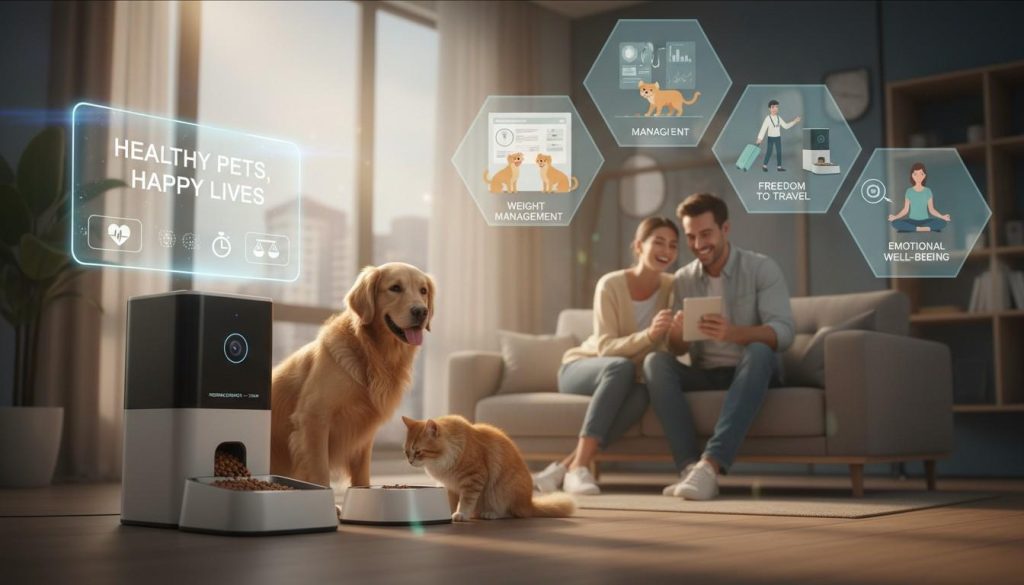
A pet that receives just the right amount of food at just the right times will develop better eating habits over time. It is like humans eating a balanced diet. Regularity promotes a better metabolism, digestion and more stable energy levels throughout the day. Owners can also gradually adjust portions based on veterinary recommendations, making smart feeders valuable tools for weight management programs. These devices are not just conveniences, they are directly related to long term pet wellness and quality of life;
Convenience for Pet Parents
Life rarely runs like clockwork and pet owners know this better than most people. Conventional feeding methods can be difficult to maintain with work, family and travel. Smart feeders offer an effective solution that guarantees consistency regardless of the conditions. Not having to be there to feed your dogs removes a major stressor from your daily life and gives you more freedom to manage your time.
The convenience is not only in the odd absence. Even on regular days, automated systems cut down on tedious tasks and make household chores more efficient. Imagine waking up in the morning, a busy morning, and knowing breakfast has been delivered, right on time. It’s like programming an automatic coffee maker to have everything ready before the day begins. Small efficiencies add up, making life easier and more pleasant for pets and people.
Potential Drawbacks and Challenges
Smart pet feeders come with great benefits but no technology is without its drawbacks. “Responsible buyers should know what challenges may be ahead of them before they invest in automated feeding systems. Being aware of these issues sets realistic expectations and helps you make better purchasing decisions. Most of the cons can be mitigated with proper maintenance, mindful product selection, and considerate integration into daily life.
Technology works best when it supports human caring, not when it replaces it. Smart feeders should be an aid, not a total replacement for attention and observation. Regular contact with animals remains important for monitoring health, behavior and mood. Automation is good for responsible ownership, but does not remove the need for active involvement.
Technical Issues and Maintenance
As with any connected device, smart feeders are not immune to the occasional technical problem. This can impact scheduled feedings if there are internet outages, software bugs, or mechanical problems, as proper backup systems are not always implemented. Battery support systems help to mitigate these risks and are an important consideration in product evaluation. Owners should also keep the equipment clean and maintained on a regular basis to ensure that the food dispensing mechanisms work properly.
Over time dust, moisture and food residue can slowly affect performance. Routine maintenance is just like taking care of any home appliance. A little attention now prevents larger problems later. By reading user reviews and choosing reputable brands, you can reduce technical frustrations and increase overall reliability. Preparedness is still the key to success in using automated pet care systems long term.
Cost Considerations
Price is another factor influencing adoption decisions. Basic automated feeders are relatively cheap, but upper-end smart feeders with cameras, complex sensors and advanced smartphone apps can be much more expensive. The investment is often tied to added convenience and functionality but not every household needs every available feature.
Consumers should look at value, not just price tags. A slightly more expensive but more reliable, better customer support, better component quality feeder could be more cost effective in the long run over multiple years of use. The decision is like buying any big household appliance. Sometimes initial savings aren’t the most important thing, long-term performance is. Knowing the needs of the individual helps ensure that investments are in line with practical needs rather than marketing trends.
Smart Pet Feeders for Different Types of Pets
Not all pets have the same feeding habits, nutritional needs, or behavioral patterns. A smart feeder that would be perfect for a small indoor cat might not be the best for a big, energetic dog. Knowing the difference helps pet owners choose products that will truly help their animals. The best smart feeder is one that works with a pet’s lifestyle, rather than one that forces a pet to adapt to the technology. This is a reality that has been embraced by modern manufacturers, who now offer specialized designs for different species, sizes and dietary needs.

This breadth of choice is a manifestation of the evolving expectations of pet parents. “Consumers are looking for personalized solutions and technology companies are responding with products that meet specific challenges. Some feeders are for portion control for weight management, while others are built for strength for large breeds. This customization enhances both functionality and user satisfaction. With the evolution of smarter pet tech, personalized feeding experiences are fast becoming the norm, not a luxury.
Smart Feeders for Cats
Cats are habit creatures. Cats often come to expect their meals at the same time each day, and they can become vocal if the schedule is changed even slightly. Smart feeders are especially good for cats, because this provides the consistency that the animals naturally crave. Portion control for indoor cats is also automated to help them maintain healthier body weights and reduce the risk of obesity and associated health issues. If you work long hours, predictable routines can go a long way toward improving your cat’s overall comfort and emotional well-being.
Some smart feeders for cats have microchip recognition systems that prevent food theft in multi-pet homes. This technology makes sure that only the appropriate cat can access a certain meal. Such features are invaluable where one animal is on prescription food or strict portion management. It works similar to a personalized key that only allows access for the proper user. Modern smart devices can help to improve nutrition and reduce competition among pets in the same environment by combining automation and individual feeding.
Smart Feeders for Dogs
Automated dog feeding solutions have their own set of challenges and opportunities. Larger breeds require more capacity for food, stronger dispensing mechanisms, and more durable construction. Active dogs usually eat very quickly and portion control is especially important for their digestive health. Smart feeders can help slow down patterns of overeating by spacing out the food according to carefully programmed schedules, instead of allowing unrestricted access throughout the day.
Other features, such as voice recordings and built-in cameras, are also popular among many dog owners. A familiar voice during mealtimes can help decrease separation anxiety and build positive connections to feeding routines. You feel like someone who loves you is encouraging you even though they are not physically there. Advanced smart feeders also provide peace of mind for owners to be able to see eating behaviour and confirm their dogs are still healthy and active. Such features elevate automated feeding from a simple luxury to an important aspect of holistic pet care.
Future Trends in Smart Pet Feeding Technology
The future for smart pet feeders looks extremely promising as technology innovation continues to change the pet care industry. Artificial intelligence, machine learning and advanced sensors are starting to impact product development in ways that would have seemed futuristic just a few years ago. Or future devices could automate feedings based on activity levels and vet recommendations, monitor eating habits and check health indicators. The feeder of the future might function more like a personal nutrition coach than your average food dispenser.

It will likely become more common to integrate with larger smart-home ecosystems. Voice assistants and wearable pet trackers and health-monitoring apps could collaborate to develop comprehensive care networks. Now imagine a scenario where the dog’s activity tracker detects that the dog is exercising more than usual and instructs the smart feeder to give the dog slightly larger portions based on preset rules. These interconnected systems would enable personalized care with little manual intervention. Essentially, technology would create a digital environment for the promotion of animal welfare.
Sustainability is yet another emerging trend shaping product innovation. As consumers demand more environmentally responsible choices, manufacturers are developing energy-efficient devices and recyclable materials. Good design lasts longer, which means less e-waste and lower ownership costs over time. So the pet tech market is heading towards not only more intelligence but also more sustainable and ethical production practices. These developments indicate that smart feeding systems will be a key part of modern pet ownership for many years to come.
Conclusion
Smart pet feeders are much more than a technological novelty. They tackle real issues for today’s pet owners and help promote healthier, more consistent routines for the animals. Benefits that extend far beyond convenience are found in automated scheduling, precise portion control, remote access and advanced monitoring capabilities. For families on the go, frequent travelers and health-conscious pet parents, these devices are a practical way to improve daily life.
The popularity of smart feeders is part of a larger shift in pet attitudes in society. Animals are increasingly viewed as beloved members of the family, deserving thoughtful investment and innovative care for their welfare. Technology is a tool that augments these relationships rather than replaces human interaction. When used responsibly, smart feeders help owners spend less time worrying about logistics, and more time enjoying companionship with their pets.
Choosing the right feeder involves carefully considering individual needs, budget constraints, and desired features. A good system can make eating healthier, reduce stress and provide more flexibility in day-to-day schedules. With future innovations in artificial intelligence and more widespread integration with smart-home technologies, automated feeding solutions will probably have an even greater role. The road to smarter, more personalized pet care has just begun.
FAQs
1. Are smart pet feeders safe for everyday use?
Yes, most reputable smart pet feeders are designed with safety and reliability in mind. They include secure food storage systems, portion controls, and backup battery options to ensure consistent operation. Regular cleaning and maintenance help maximize performance and safety.
2. Can a smart pet feeder work without Wi-Fi?
Many models continue dispensing meals according to saved schedules even if the internet connection fails. Remote controls and app-based adjustments, however, typically require active Wi-Fi access. Battery backups can also maintain functionality during power outages.
3. Are smart feeders suitable for multiple pets?
Some advanced feeders support multi-pet households through features such as microchip recognition or RFID access systems. These technologies ensure that each animal receives the correct food portions according to its individual dietary requirements.
4. What type of food can be used in a smart pet feeder?
Most smart feeders are designed primarily for dry kibble. The size and shape of the food matter because extremely large or irregular pieces may cause dispensing issues. Certain specialized models support semi-moist foods, but owners should always follow manufacturer recommendations.
5. Is investing in a smart pet feeder worth the cost?
For many pet owners, the convenience, consistency, and health benefits justify the investment. Automated feeding reduces stress, supports portion management, and provides peace of mind during busy schedules or travel. The value ultimately depends on personal needs and the lifestyle of both the owner and the pet.