


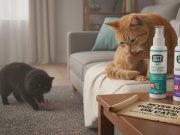




What Is the Best Flea and Tick Spray for Cats?
It isn’t a case of selecting the highest rated product or the prettiest label to find the best flea and tick spray for cats. Cats groom themselves constantly, so anything that lands on their coat could potentially be licked off and ingested. Therefore, the perfect product must be labelled specifically for cats, be appropriate for the age and size of the cat, and be used exactly as directed. The U.S. Environmental Protection Agency recommends that pet owners use flea and tick products only on the species and weight range for which they are labelled and specifically warns against ever using dog flea products on cats, because some pesticides can be much more toxic to cats.

Many households can benefit from a cat-specific spray as part of a wider flea control program, particularly if fleas are being found on bedding, carpets, furniture or anywhere else a cat spends time. But a spray should not be assumed to be a total substitute for veterinary flea prevention. Fleas can cause allergic skin disease, intense itching, hair loss and, in heavy infestations, anaemia. “Ticks can transmit several diseases to pets,” the FDA also states, adding that controlling these parasites is about more than just keeping your cat comfortable.
In fact, Vet’s Best Cat & Home Easy Spray is one product marketed specifically for cats and household surfaces, according to 2026 product information. The listed formulation contains clove oil and cottonseed oil and the product is marketed for cats, bedding, carpets, flooring, rugs and drapes. You could also go with the Vet’s Best Cat Flea & Tick Gentle-Mist Spray, which is formulated specifically for cats. However, cats can react differently to topical products, so it’s more important to read the full label and consult a veterinarian than to go with a popular brand.
Why Cat-Specific Formulas Matter
Cats aren’t little dogs. They have different metabolisms, different grooming habits, and different sensitivities to some chemicals. Therefore, just because a product is safe for dogs does not mean it is safe for cats. The EPA’s current guidance is quite clear on this point: flea and tick products should only be used on the animal species listed on the label, and a dog product should never be substituted for a cat product.
This is particularly important when shopping online, as two bottles may look nearly identical, yet contain completely different formulations. A product can say big letters “flea and tick spray” and not be for direct application to cats. Some products are labelled for use only on carpets, bedding, yards or furniture, others are labelled for direct application to the animal. Check directions before buying, don’t go by the product name.
Best Flea and Tick Sprays for Cats in 2026
There is no single spray that works for every cat. However, the correct flea treatment is dependent on variables such as the age, weight, health history, lifestyle and exposure risk of the cat, according to veterinary advice published in 2026. As a result, the following products are useful examples of cat-specific sprays on the market, not a claim that one product is universally superior
| Product | Best suited for | Notable feature | Important consideration |
| Vet’s Best Cat & Home Easy Spray | Cat and household areas | Cat-specific plant-based formula | Follow label directions carefully |
| Vet’s Best Cat Flea & Tick Gentle-Mist | Direct cat application | Gentle-mist format | Cat must be allowed to dry before grooming |
| Cat-specific veterinary flea treatment | Persistent or severe infestations | Individualized treatment | Veterinary guidance may be preferable |
Vet’s Best Flea & Tick Cat & Home Easy Spray
The Vet’s Best Cat & Home Easy Spray is unique in that it is specifically marketed for cats and can be used on several household surfaces as well. Current product information lists clove oil and cottonseed oil as active ingredients and says the product is for cats, pet bedding, carpets, flooring, rugs and drapes. This makes it especially interesting for owners dealing with fleas in the environment as well as on the cat.
It’s still a pesticide, not your everyday household fragrance. Carefully follow the label, provide adequate ventilation and if the label directs you to do so, keep the cat from licking or chewing the treated fur until the product is completely dry. The current customer info also shows a significant number of reviews. The 14-ounce size was listed at 4.4 stars from 153 ratings on Chewy when checked for this article. Customer ratings can be useful indicators of usability, but they should never take the place of veterinary advice or the product label.

Best for Cat and Home Use
This type of spray can be useful as flea control is rarely restricted to the cat alone. Flea eggs and immature stages can remain in the environment, especially in carpets, bedding, upholstered furniture, and other areas where pets like to rest. Therefore, treating only the visible adult fleas on the animal may lead to disappointing results as new fleas may continue to emerge.
The current product listing is explicit that this spray is usable on cat bedding, carpets, floors, rugs and drapes. It is more versatile than a product that is only designed to be used on the animal. But always check the exact label on the bottle you buy, because formulations and directions can change.
Vet’s Best Cat Flea & Tick Gentle-Mist Spray
Another choice for cats is Vet’s Best Cat Flea & Tick Gentle-Mist Spray. The current product information shows the spray is for cats and contains peppermint oil and eugenol from clove. The product is to be applied with care and its directions stress that the coat should dry before the cat grooms itself.
This is important because cats can lick their coat right after treatment. Chewy’s product instructions advise testing a small amount first and looking for signs of sensitivity, then applying sparingly without saturating the coat. If your cat is sensitive, elderly, very young, pregnant, sick or already on another parasite treatment it’s a good idea to have a chat with your veterinarian before adding a spray to the mix.
How Flea and Tick Sprays Work
Depending on the active ingredient, there are different types of flea sprays that work in different ways. Some are primarily used to kill adult fleas and ticks on contact, some may also affect eggs or immature stages. Some products are also used for environmental treatment, i.e. to reduce parasites in carpets, bedding, furniture and other areas and not to provide long-term protection on the animal.
That difference matters when comparing products. A contact spray that kills insects on contact can be useful for immediate control but may not be as long lasting as a veterinary preventive. Flea and tick products are available in different forms, such as sprays, shampoos, collars, spot-ons, oral medications and other formulations, according to the FDA. The choice between them depends on the animal and the particular parasite-control problem.
What to Look for in a Cat Flea Spray
Begin with the tag. Find specific wording that the product is safe for cats, not just a generic pet spray. Check for minimum age, weight restrictions, application instructions, active ingredients, frequency of use, and warnings about contact with eyes, nose, mouth or sensitive skin.
You also must identify whether the spray is for direct application, environmental application, or both. This is one of the easiest mistakes to make when shopping online because a product listing can include several versions combined. The dog-and-home formula is not automatically interchangeable with the cat-and-home formula.
Finally, look at the real-world situation of your cat. An indoor cat that gets the occasional flea may require a different approach than an outdoor cat that frequently gets ticks. A kitten, senior cat, pregnant cat or cat with an existing medical problem deserve some extra caution. Today, veterinary advice is that there is no one flea treatment that is safest for all cats.
Ingredients and Safety
The word natural doesn’t automatically equate to “risk-free.” Of course, plant ingredients can still affect animals, and the safety of a product depends on formulation, concentration, route of exposure and proper use. So a responsible buyer should look at the whole ingredients list and the label directions, not just the marketing jargon.
According to the EPA, flea and tick pesticides can cause problems if not used properly or in a manner inconsistent with the label. It also notes transfer of pesticide residues from treated pets to children. That means safe flea control is more than just choosing a product. This also means using it correctly and handling the contact afterward.
Why Permethrin Is a Major Concern
Do not use a dog flea product containing permethrin on a cat unless specifically directed to use a product proven appropriate for that cat by a veterinarian. The EPA specifically warns against using dog flea and tick products on cats as some pesticides can be more toxic to one species than another.
If you accidentally use a product intended for dogs on your cat, don’t wait for symptoms. Contact a veterinarian or the animal poison control center immediately for treatment advice. Be ready to give the product container or label to the poison control center or veterinarian. The EPA also advises that if there is an adverse reaction, the pet should be bathed with mild soap and rinsed thoroughly and veterinary advice should be sought.
How to Apply Flea Spray to a Cat Safely
Always read the label before use for exact directions. If the product is labelled for direct application to cats, check the minimum age and weight restrictions. Unless otherwise directed on the label, keep the spray away from the eyes, mouth, nose, genital area, wounds, and irritated skin.
For products that require a sensitivity test, start with the small dose recommended by the manufacturer and watch the cat. One Vet’s Best cat spray presently advises looking for symptoms such as skin irritation, rapid breathing or incoordination before moving to more widespread use. Never purposely soak the cat’s coat thinking that if you use more product, it will work faster.

Do not allow grooming until product is completely dry after application, when label so directs. This can be difficult as cats naturally groom themselves, but is a vital part to reducing accidental ingestion. If your cat shows any unusual behaviour after you apply a flea product, such as excessive drooling, weakness, vomiting, difficulty breathing, tremors, or any other symptoms that concern you, call your veterinarian right away.
How to Treat Your Home for Fleas
You can treat the cat, but if you don’t fix the environment, it’s like trying to drain the bathtub with the water still running. You may see adult fleas on your cat, but other life stages may be found throughout your home. This is the reason why environmental cleaning is an important part of flea control.
Vacuum carpets, rugs, upholstered furniture, cracks, corners and areas where your cat sleeps. Wash removable bedding regularly as per the care instructions for the fabric. The importance of a cat’s favourite sleeping area cannot be overemphasised, as this is where the animal spends a lot of time and where fleas and immature stages of fleas can accumulate.
Only use environmental sprays as per label instructions. If a product is intended for household surfaces, not direct use on cats, don’t try to spray it on the animal. Keep pets and people out of treated areas until the time specified on the label. Ventilate area as appropriate.
Flea Spray vs Spot-On Treatments
Sprays and spot-ons are for different things. A spray can be convenient for targeted application or environmental control, while a veterinary spot-on may provide longer lasting parasite protection depending on the active ingredient. According to the EPA, spot-on products are liquid pesticides that are applied to a specific area of an animal’s skin, typically the neck or shoulders.
If your cat has had a flea problem for a long time, a spray alone may not be the best solution. Veterinary-reviewed guidance notes that the choice of treatment should consider age, weight, health, lifestyle and risk of exposure. Some cats may do better with a preventive recommended by a veterinarian than with repeated topical spraying.
| Treatment type | Typical purpose | Main advantage | Main limitation |
| Flea spray | Immediate or targeted control | Easy to target specific areas | May require repeated use |
| Spot-on | Ongoing parasite prevention | Convenient and longer-lasting for some products | Must use correct cat-specific product |
| Oral medication | Systemic parasite control | No wet coat | Requires correct dosing and veterinary suitability |
| Flea comb | Physical flea removal | No pesticide exposure | Labor intensive |
| Environmental treatment | Reduce household infestation | Addresses fleas away from the cat | Must be used carefully around pets |
Common Mistakes Cat Owners Make
One of the biggest mistakes is to think that more product means better protection. Pesticides are formulated for specific application rates and exceeding those recommendations can increase exposure without improving the product’s performance. The EPA recommends that you only use the amount indicated for the size or weight of the animal.
Another common mistake is to combine different flea products without consulting a professional. An owner might use a spray, collar, spot-on, shampoo and another treatment at the same time because the infestation is frustrating. However, combining products can increase exposure and may create unnecessary risk.
A third error is to disregard the environment. If the cat has a flea infestation and the home is not treated, any new fleas that hatch can continue to jump on the animal. Effective flea control involves a multi-pronged approach to the pet, the environment of the home and a suitable long-term prevention plan.
How to Choose the Right Spray for Your Cat
If you want a spray, ask these five simple questions first. is it clearly marked for cats? Is my cat too young or too small for it? is it for immediate application or environmental use? What active ingredients are there? And am I already on another flea or tick medicine?
The answers can filter out wrong products quickly. For example, just because a spray has thousands of positive reviews, does not mean it is the right one to choose for dogs only. Just because the bottle says cats somewhere on the packaging doesn’t mean you can use a household spray directly on your cat. It’s the label that is key.

If the infestation is severe or persistent, consult a veterinarian rather than repeatedly using over-the-counter sprays. PetMD current veterinary advice says the same in a more general sense: flea medication is an individual decision based on the individual cat and its risk of exposure.
When You Should Call a Veterinarian
A visit to the vet is especially important if your cat is a young kitten, is elderly, pregnant, nursing, underweight, chronically ill or taking other medications. It is also suitable for when fleas are so numerous that your cat is weak, pale, unusually tired or losing large amounts of blood.
Flea infestations can cause anaemia and the FDA warns that fleas can cause serious health problems in cats. Ticks can also transmit infectious diseases so repeated tick exposure deserves more attention than just removing individual ticks when you see them.
You should also contact your vet if your cat has a bad reaction after using a flea product. The EPA recommends that owners seek veterinary assistance if an adverse reaction occurs and provides specific guidance on how to wash off topical products when indicated.
Conclusion
The best flea and tick spray for cats is not necessarily the strongest smelling, cheapest or most popular product. The most important considerations are whether the product is specifically labelled for cats, whether it’s appropriate for your cat’s age and situation, whether you follow the application instructions properly, and whether the spray actually addresses the type of flea or tick problem you have.
Right now, the EPA recommends reading labels, using products only for the species and size indicated and never substituting a dog flea product for a cat product. Cat-specific sprays like Vet’s Best products can be included in a flea-control regimen, but persistent infestations may require a veterinarian-recommended preventive and environmental treatment. Product reviews may be helpful for comparing convenience and user experience, but they are not to be considered veterinary evidence.
Most importantly, remember that flea control is an entire environment problem. Properly treat the cat, keep clean the places where the cat spends time, avoid dangerous combinations of products and choose long term prevention, based on the individual needs of your cat. If you are unsure about an ingredient or product, it is usually far better to ask your veterinarian before you use it, rather than find out afterward that the product was not suitable.
Frequently Asked Questions
What is the best flea and tick spray for cats?
There is no single best spray for every cat. A cat-specific product such as Vet’s Best Cat & Home Easy Spray can be considered for situations covered by its label, while recurring or severe infestations may require a veterinary preventive. The safest choice depends on your cat’s age, weight, health, lifestyle, and parasite exposure.
Can I use dog flea spray on my cat?
No. Do not use a dog flea product on a cat unless a veterinarian has specifically confirmed that the exact product and dose are appropriate. The EPA warns that some pesticides can be substantially more toxic to cats than dogs.
Is natural flea spray safe for cats?
“Natural” does not automatically mean safe. Some plant-derived substances can cause problems depending on the formulation and exposure. Always check the complete label, confirm that the product is specifically labeled for cats, and follow the manufacturer’s instructions.
Can flea spray alone get rid of fleas?
Not necessarily. Fleas can exist in multiple life stages and in household environments. A successful control plan may require treating the cat, cleaning the home, and using an appropriate long-term preventive when recommended by a veterinarian.
What should I do if my cat reacts to flea spray?
Stop further exposure and contact a veterinarian promptly. The EPA advises bathing an affected pet with mild soap and plenty of water after an adverse topical reaction while seeking appropriate professional guidance. If the cat has severe symptoms such as breathing difficulty, tremors, seizures, profound weakness, or collapse, treat it as an emergency.